Friday, 26 October 2012

Floral Friday - Michaelmas Daisy - Family Friendly Plants


Bee on Aster

A good late summer performer for the garden is the Aster or Michaelmas Daisy. So called because it has daisy-like flowers from pink, purple to blue and it flowers at the time of Michaelmas, on 29 September when in parts of Europe remember Archangel Michael.


Its reliability and hardiness help to make it a truly family friendly plant. Other characteristics include


  • It is can be bought as a perennial, which means it comes back every year.

  • The bees like it and it provides late summer nectar for them.

  • It is low maintenance.

  • It does not succumb to slug and snail damage.


If growing with children you could grow from seed. However for me this plant’s value lies in providing instant late summer colour. There are many other flowering plants that would be easier for them to grow. I would suggest a visit to the garden centre from the end of July onwards to see what varieties are available.  You will need to cut back the plant at the end of the season.


A number of common varieties are about 4 feet high, but some of the taller varieties can start to look a bit scraggy towards the end of the season. Worth considering are shorter and dwarf varieties like the one below, no more than 2 feet tall and which will not be such a target for a football .


Aster lateriflorus 'Bucks Fizz'


This Floral Friday post is one of a series suggesting family friendly plants you and your children could grow in your garden.  Please take a look at our previous suggestions.

Friday, 19 October 2012

Floral Friday - Aquilegia - Family Friendly Plants


Aquilegia


If you know this flower, other names for it are Columbine and Grandma Bonnets; you may be saying what so family friendly about it? It is a cottage garden plant with thin stems holding up the very pretty flower heads which could easily get knocked by a ball or trampled upon. I say yes all of these things are true, but it is a lovely flower to have in May. It blooms about the same time as For get me nots and bluebells.


For me, its family friendly characteristics include:-

  • It is really easy to grow.
  • It flowers early in the garden.
  • Lots of multiple flowers on one plant.
  • It is perennial, which means it will come back the next year.
  • It is low maintenance.
  • It does not get nibbled by slugs and snails.
  • It is available in a wide range of colours, pink, cream, purple, white and yellow. If you have a child who loves pretty flowers they are going to adore these.


Columbines are a short-lived perennial (4 or 5 years, usually), so let them re-seed from parent plants and you’ll always have some around.  You can grow them easily from seed.  As they flower early you can sow them in pots and trays from January onwards.  If you want to go for an easier option buy a couple of different varieties as soon as they are in the garden centres at about Easter time.  As they self-seed and cross pollinate easily then you will find many more and different varieties in your garden in the following years.

You will need to cut away old foliage in the late summer.  But as you see from the above photograph taken in my garden in mid-October the foliage soon reappears.  It provides an attractive plant throughout the winter.


Friday, 12 October 2012

Floral Friday - Chives - What to plant with your Kids

Chives

It is its versatility that makes chives such a great plant to grow with your kids.  It is of course a culinary herb and part of the onion family, but its flowers are beautiful – a delicate ball of pinky, purple.   


The child and family friendly properties of the chive plant Allium Schoenoprasum include :-


  • It is a hardy perennial, which means it will come up every year.


  • It has edible leaves and flowers.


  • It requires little maintenance.


  • It is relatively pest free.


  • Its clumps will cope with being hit by balls.


Chives are an essential addition to any herb garden. Equally you could equally grow them in any flower border or in pots. Ideally they like well-drained soil and full sun, but they will grow in other conditions. You can grow from seed in the spring or buy one or two pots from the local garden centre. You will need to cut it down in late summer or autumn so it can grow again in the spring.


This year in our house we have watched and photographed the flower heads developing, picked them as a cut flower and eaten both leaves and flowers. We still have some dried chive flowers in a vase. All from one plant. Not bad I reckon!

If you liked this then please take a look at other family friendly plants selected for our Floral Friday feature,

Friday, 5 October 2012

Floral Friday - Nasturtiums - What to Plant with your Kids

If you are not too sure what flowers to plant with your kids this is a good one to get going with.  It is an easy- grow annual. 

Nasturtiums

This plant’s family friendly features include:-
  • Large seeds which are easy to sow.
  • 8 Weeks from seed to flower. Short waiting time - Very child friendly!
  • It will self-seed.
  • You can sow direct into the ground or sow in pots.
  • Both the flower and leaf are edible. 
  • It requires very little maintenance.

I have a childhood memory of a story where a roof was thought to be on fire. When the fire brigade arrived it was found to be a roof of trailing nasturtiums. You can certainly get some fiery colours, orange, blood orange, red and yellow. Though I have yet to find a roof that matched the image placed in my mind by that story.

Nasturtiums at Chelsea Flower Show

Trailing varieties are available and they are also lots of more compact ones on the market suitable for pots and edges of the border.


Sometimes butterflies lay their eggs under nasturtium leaves. When the eggs hatch hundreds of tiny caterpillars can munch their way through them. A great chance to read  together the Hungry Caterpillar by Eric Carle.   You may need to check the leaves regularly and remove the caterpillars. Black fly also like nasturtiums. Your child can help get rid of these by watering them and the plants all over with a weak solution of eco washing up liquid.

Both leaves and petals are edible. Some children may find that their peppery taste does not suit them. Although they are annuals it is easy to ensure more will come up next year.   If you let their seeds fall to the ground some will probably self -seed the next year. The seeds are also very easy to collect and save to plant next year. So one packet of seeds will last a long time - my sort of plant!

Friday, 28 September 2012

Floral Friday: Edible Flowers - Calendula


Calendula officinalis

Calendula officinalis is one of my top ten flower plants to grow with children.  Everyone thinks of a sunflower as a children’s flower.  The pot or English Marigold may not grow so tall, but it matches the sunflower’s beauty, petal pattern and gorgeous orange and yellow colours.


Marigold - child friendly plant


Its family-friendly characteristics include:-


  • It is an annual & easy to grow from seed.


  • It will self- seed.


  • It is bee friendly.


  • The plant will keep flowering from June/July to the first frosts (though you will need to keep deadheading for this to occur).


  • It has edible flowers – use in salads or to dye rice.


You do not see the grown flowers very often in garden centres so you will need to grow from seed. There is a wide variety of orange to yellow flowers available at varying heights.


You can germinate in pots or sow direct into the ground once the soil begins to warms up in March /April.

Do not confuse with French Marigolds Tagetes Patula which are not edible.


Marigolds on edge of vegetable bed


It is also used as a companion plant particularly for certain vegetables. It is therefore often a favourite on the allotment.  It repels whitefly from tomatoes and can lure aphids away from beans. It also attracts beneficial insects, including ladybirds, lacewings and hoverflies, all which prey on aphids.  Wish my vegetable plot looked like the one above.

Friday, 21 September 2012

Floral Friday: Edible Flowers - Courgette Flowers

Today I am introducing Floral Friday. A regular post every Friday on flowering plants to grow with your kids, and to have in your garden. All the plants featured will be ‘family friendly’. By this I mean they will either:-

 
  • Grow easily and be a ‘good doer’.
  • May self –seed. 
  • Will have a point of interest e.g. interesting smell or edible. 
  • Not too much maintenance. 
  • Long flowering. 
  • Will withstand a couple of hit by a football. 
  • Not too invasive.

I will feature not just flowers from herbaceous plants, but also from shrubs, tree and vegetables. I hope the regular feature will help to inspire you and your family to grow more whilst also growing your kids.


Courgette Seedling
 
 
To start us off today, I have chosen an edible flower from the courgette plant.
 
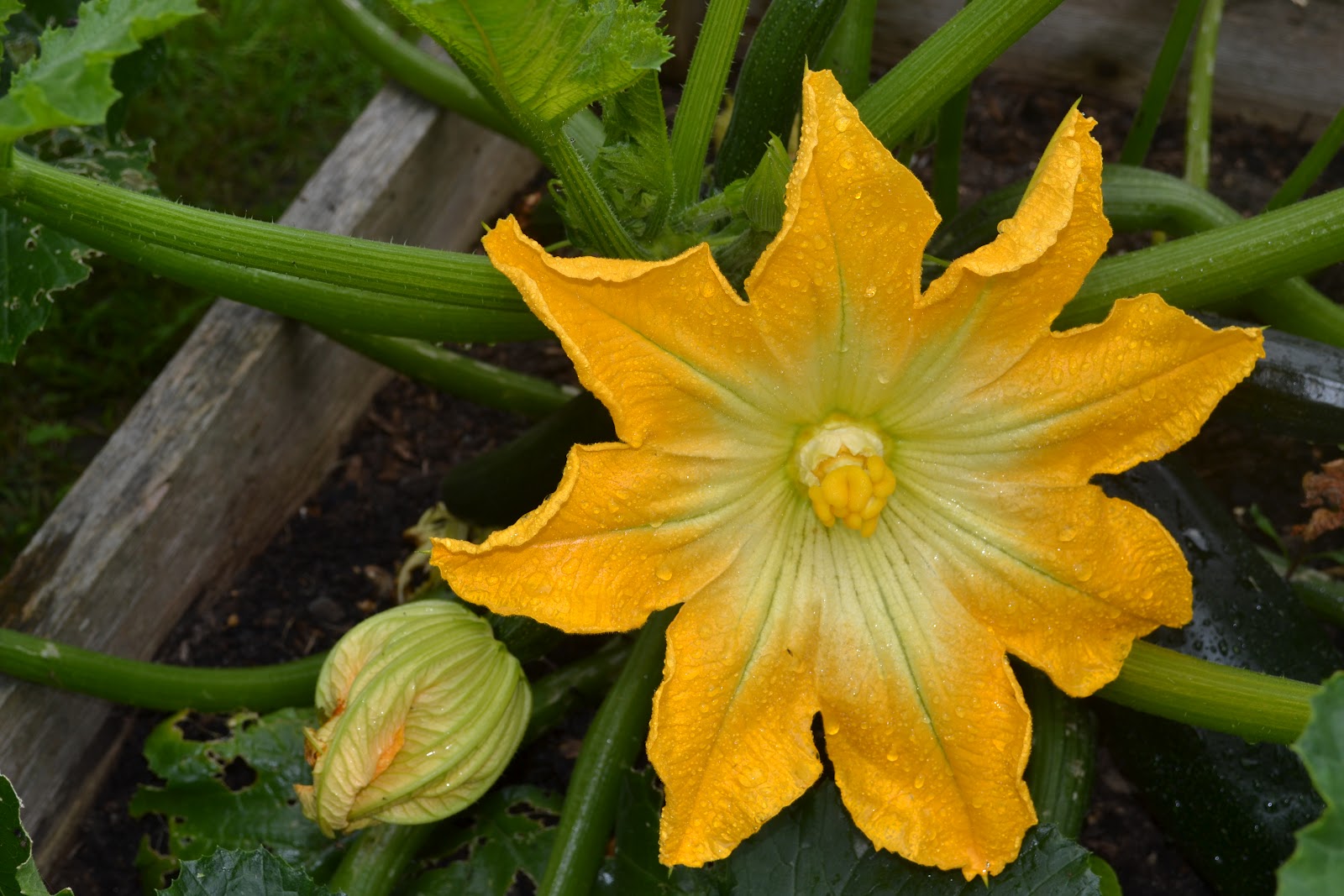
This is such an easy plant to grow from its lovely large seeds. If you haven’t grown courgette with kids before and you have space in a vegetable plot for them, then they are well worth trying. The deep yellow flowers are one of the most beautiful of all the vegetable flowers. They don't last long as they need to turn into that courgette. Watching them daily is an easy way for a child to see how a flower turns into a vegetable.
  
 
Courgette Flower

 
Deep Fried Courgettes

And, of course, if you don’t want all the numerous courgettes that one plant is likely to produce you can always eat the flower. They are really yummy deep fried in batter.

  
I have more on growing courgettes with children on my kidsinthegarden site.


Tuesday, 18 September 2012

PLANTING SPRING BULBS WITH YOUR KIDS


Planting spring bulbs must be one of the easiest kids gardening activities. Many do deserve the label ‘easy grow’. All you need is a trowel, bare patch of soil and bulbs. There are loads of easy grow bulbs. Simply either follow the instructions on the packet or from your supplier. If planting direct into the ground a marker ( made by your kids ) reminding you of their location will mean you may not disturb them.


September is definitely the month for buying and planting the majority of bulbs that will flower the following spring. This year I have already bought mine for planting this year, which meant I had a wide choice at the garden centre.


Narcissus 'Sealing Wax' Bulbs


I choose 40  Narcissus 'Sealing Wax' bulbs which are described as great for inexperienced gardeners and for those that like low maintenance gardens.  I will report back in the spring.


Also in the shopping basket was an old favourite and, perhaps the most popular narcissus of all, Tete a Tete.  I always plant these in pots, which can then be brought close to the house or indoors when flowering. So kids can always easily see what has been grown.  They grow to about 15 cm.  I always plant all of my bulbs slightly closer than the instructions and these I plant always much closer together to make a compact display.


Allium Bulbs
My final item was a selection of allium bulbs. I have not always had a great deal of success with alliums. They are so spectacular and majestic in the border, with such lovely seed heads I am trying again this year.

When planting any bulbs with your children I would always get them to wash their hands after. You may also need to manage expectations. Those spring months are a long way ahead. I always mention to my son that they will flower about the same time as his cousin’s birthday. Connecting their flowering time to mothers’ day may also work.

Another easy grow bulb are grape hyacinths Muscari. You may also remember as a child growing hyacinths in a glass container showing all the lovely white roots.

So if you are wondering what to do in the garden with the children this weekend planting bulbs is your answer. You and your family will be really pleased with your efforts next Spring. Hold out with tulip bulbs though until late October.  They are best planted later in Autumn.

Related Posts with Thumbnails