Showing posts with label TV Programmes Childrens Gardening. Show all posts

Friday, 28 September 2012

Floral Friday: Edible Flowers - Calendula


Calendula officinalis

Calendula officinalis is one of my top ten flower plants to grow with children.  Everyone thinks of a sunflower as a children’s flower.  The pot or English Marigold may not grow so tall, but it matches the sunflower’s beauty, petal pattern and gorgeous orange and yellow colours.


Marigold - child friendly plant


Its family-friendly characteristics include:-


  • It is an annual & easy to grow from seed.


  • It will self- seed.


  • It is bee friendly.


  • The plant will keep flowering from June/July to the first frosts (though you will need to keep deadheading for this to occur).


  • It has edible flowers – use in salads or to dye rice.


You do not see the grown flowers very often in garden centres so you will need to grow from seed. There is a wide variety of orange to yellow flowers available at varying heights.


You can germinate in pots or sow direct into the ground once the soil begins to warms up in March /April.

Do not confuse with French Marigolds Tagetes Patula which are not edible.


Marigolds on edge of vegetable bed


It is also used as a companion plant particularly for certain vegetables. It is therefore often a favourite on the allotment.  It repels whitefly from tomatoes and can lure aphids away from beans. It also attracts beneficial insects, including ladybirds, lacewings and hoverflies, all which prey on aphids.  Wish my vegetable plot looked like the one above.

Friday, 21 September 2012

Floral Friday: Edible Flowers - Courgette Flowers

Today I am introducing Floral Friday. A regular post every Friday on flowering plants to grow with your kids, and to have in your garden. All the plants featured will be ‘family friendly’. By this I mean they will either:-

 
  • Grow easily and be a ‘good doer’.
  • May self –seed. 
  • Will have a point of interest e.g. interesting smell or edible. 
  • Not too much maintenance. 
  • Long flowering. 
  • Will withstand a couple of hit by a football. 
  • Not too invasive.

I will feature not just flowers from herbaceous plants, but also from shrubs, tree and vegetables. I hope the regular feature will help to inspire you and your family to grow more whilst also growing your kids.


Courgette Seedling
 
 
To start us off today, I have chosen an edible flower from the courgette plant.
 
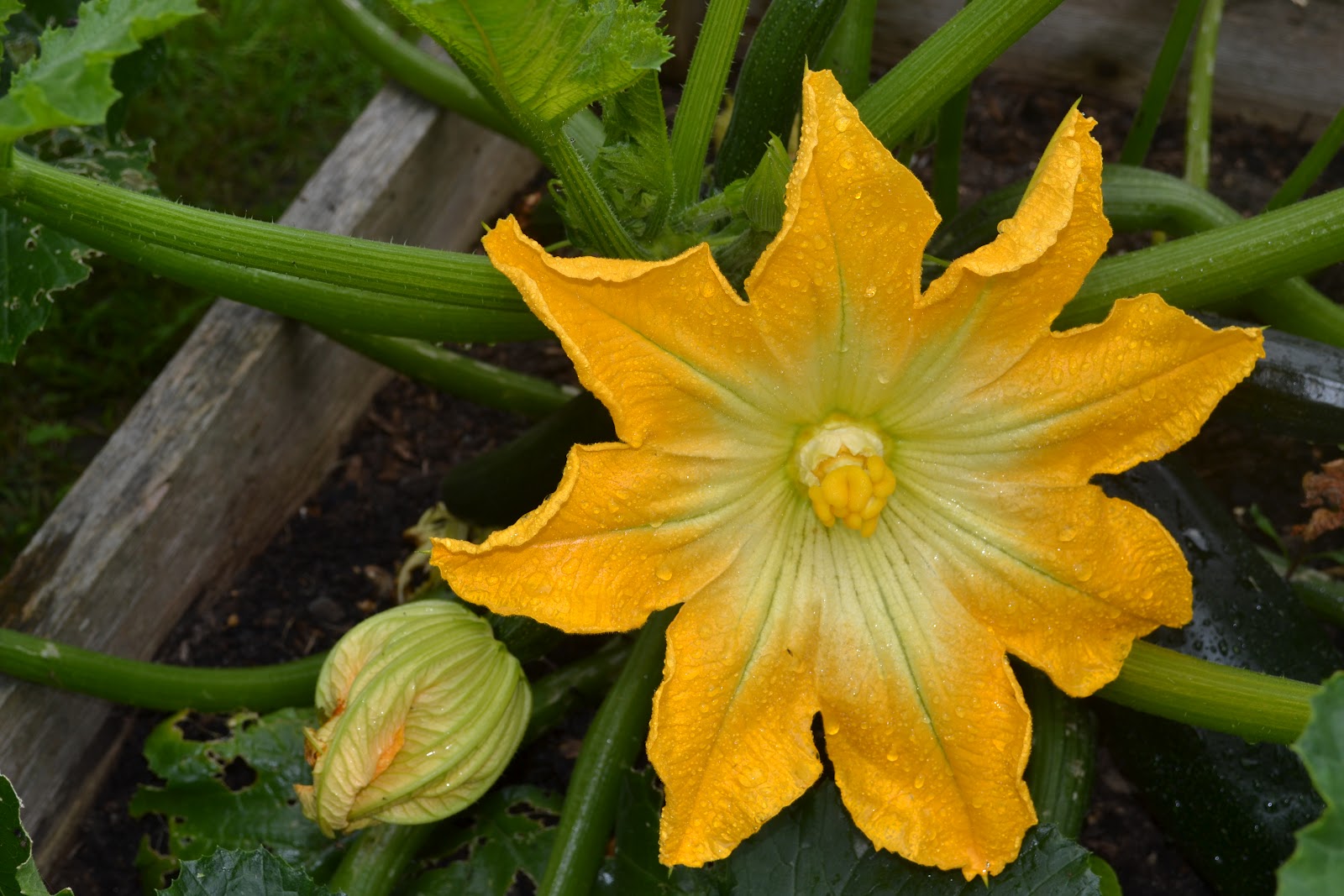
This is such an easy plant to grow from its lovely large seeds. If you haven’t grown courgette with kids before and you have space in a vegetable plot for them, then they are well worth trying. The deep yellow flowers are one of the most beautiful of all the vegetable flowers. They don't last long as they need to turn into that courgette. Watching them daily is an easy way for a child to see how a flower turns into a vegetable.
  
 
Courgette Flower

 
Deep Fried Courgettes

And, of course, if you don’t want all the numerous courgettes that one plant is likely to produce you can always eat the flower. They are really yummy deep fried in batter.

  
I have more on growing courgettes with children on my kidsinthegarden site.


Friday, 6 January 2012

Six Resolutions for my Garden in 2012

What are Yours?
Spending time in my garden, gardening with my son, and thinking and reading about all things horticultural, provide me with inspiration, stimulation and a sense of purpose. I’d be lost without a garden. So the New Year brings new thoughts on how I get to grips with my garden. This time last year I looked back at my garden. This year I am looking forward.

I resolve to:-

1 Do what all keen gardeners want to do – get out into the garden more often. Building work in my house means that I can now see my back garden from my kitchen and also better from the living space at the back of the house. So I am hoping that this new visibility will entice me out more often. The housework will suffer, but what the heck. I will also join the ranks of the early risers for the odd spot of gardening before breakfast and before the rest of the household has risen.

2 Plant those plants. All too often plants get bought and seedlings get germinated and then stay in their containers far too long, drying out, getting root bound and dying. I say no longer in this garden as I go out to pick up the azalea (still in its original pot) which has been blown over by the wind.

3 Keep a wildlife garden diary with my son. I garden organically and hope that our plot is wildlife friendly. At times we spot our garden toad and we all love seeing the different garden birds. A record will help start to identify who lives with us and visits us. It may also encourage my son to write some entries in the diary and me to think about planting more to encourage wildlife into our garden.

4 To get daddy out into the garden. My brother in law is just about to start a vegetable plot with my niece and nephew. This got me thinking that whilst I love performing my earth mother role with my son perhaps it would be good for my son not just to identify gardening with me.  A bit more daddy in the garden would be a good thing.

5 Use that greenhouse. Last year I was lucky to have acquired the use of an all singing all dancing greenhouse, with light, heat and electricity. I am ashamed to say I hardly used it as I found it rather intimidating. This year I will go for it big time and hopefully grow more exotic and tender fruit and veg.  It is not just going to me who will to be bold in growing, my son already has a packet of white sunflower seeds to experiment with.

White Sunflower Seeds

6 National Gardening Week. The RHS are running a National Gardening Week commencing Monday 16 April 2012, including a new campaign for School Gardening.  Such a good idea, can’t think why it hasn’t happened before. I am actively going to publicise this locally and perhaps organise some local events. So watch this space.

Please let us know what your plans are for going Out2play in your garden this year.

Sunday, 21 November 2010

What to do with all those Leaves in the Garden


Making Leaf Mould


We have been making leaf mould in our garden and have done so for the last couple of years. It is an easy gardening activity for children; one that gets them into the garden in the autumn. Leaf mould is organic and involves no carbon footprint. It is simply a case of raking up the leaves, bagging them and storing them, and then waiting.


Here’s how we do it. The garden has leaves mainly from Silver Birch, Goat Willow, Oak and a little bit of Acer. We rake them into piles and bag them up. I know that many people use black plastic sacks. We recycle and use the plastic coverings you get when clothes are returned from the dry cleaners. We like it best if the leaves are dry as they are not so cold to handle. As water is an essential ingredient for leaf mould we place couple of holes in the plastic bag and the add water.


A couple of times I have left some bags of leaves under shrubs and find that as the plastic begins to disintegrate and worms worm their way into the leafy mixture the leaves return themselves to the garden with very little help.


The filled sacks then spend the following 18 months in an old dustbin in the garden. We spread the leaf mould out onto the soil early spring as a kind of mulch. This is another gardening job for the children help with. I have also sieved the leaf mould and used it with potting compost for transplanting seedlings.


Last years leaf mould
 The people at Gardening Organic have more detailed advice about what to do.

But why oh why is it called leaf mould? There is nothing messy or mouldy about it. It doesn’t smell and once rotted down turns into a lovely friable material. The name conveys up images of fungus and stained walls and must surely put some people off. How about calling it leaf compost or leafy soil?  Love to hear your suggestions.

Let me know what you do with the leaves in your garden. Please please don’t say you take your leaves to the local rubbish tip. We find it so simple to recycle them inside our garden and hope you can too.


Tuesday, 19 January 2010

Cbeebies - Gardening and Nature

Sitting watching Dirt Girl World with my son last night got me wondering how much these sorts of programmes will influence our children. There is a plethora of nature type programmes on CBeebies (my son has yet to graduate to CBBC, except for 'the Deadly 60').

Dirt Girl World is in fact my least favourite - something about the animation and those faces - spooky. I prefer the Green Balloon Club and the CBeebies version of Springwatch. Gordon the Garden Gnome was OK and although is not being broadcast at present there are two fun games on the Cbeebies website.

Others have pointed out that even quite young children can list different types of inanimate objects e.g. makes and models of cars and their favourite TV characters, but how many can name more than a couple of plants and shrubs in their gardens. I have to admit that in the fog of sleepless nights with my son it took me a little while to note that all of the Flowertots are named after flowers. Yet I wonder how many children ever realise that violet and pansy are also the names of garden flowers.

Will those who watch grow up to become generation of budding gardeners and eco-warriors? I certainly hope so. Will these programmes encourage children and their families to get out there and have a go? They might. At least they are a starting point. I know I now have a demand from my son for us to grow more vegetables. So that is what we are doing this year.
Related Posts with Thumbnails